In Victory, Magnanimity, In Peace, Goodwill
A History of Wilton Park
by Richard Mayne
Wilton
Park is a unique phenomenon: part of the British Government, but academically
independent; well-known among policy makers, but with a low public profile;
created to help foster democracy in post-war Germany, but now with global
reach; a vehicle for international dialogue, never one for British propaganda.
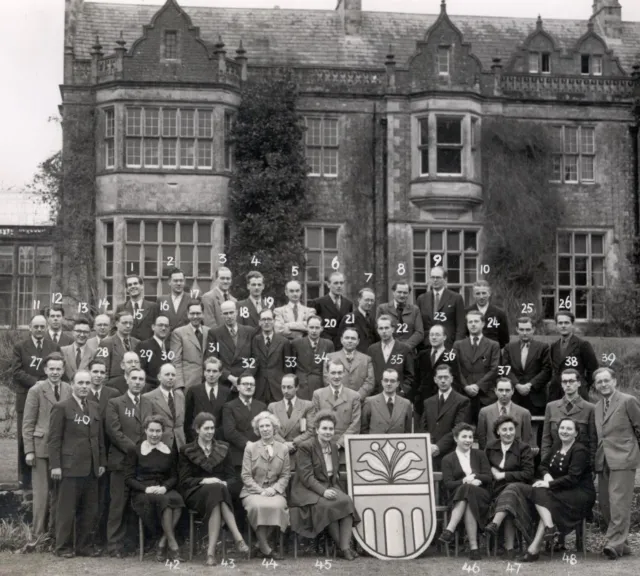
Why did the British Government create such an institution in 1946? What impact did it have? How did it evolve from a training centre for German prisoners of war to today's international policy forum?
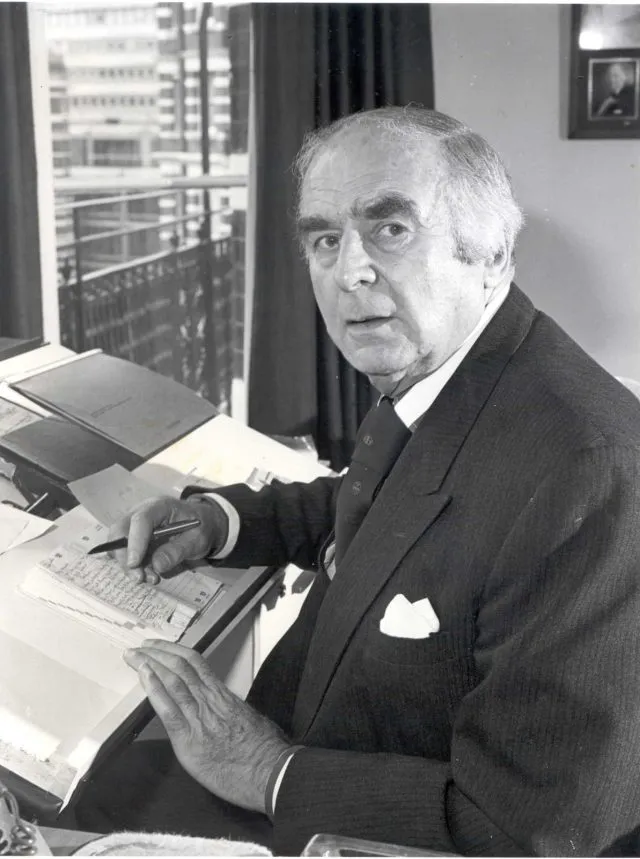
In Victory, Magnanimity, In Peace, Goodwill tells the story for the first time. It describes how it was Winston Churchill who proposed Wilton Pasrk's post-war role. But its founding father was a German: Heinz Koeppler, an historian who had fled from Hitler to Magdalen College, Oxford, and had worked in Britain's wartime Political Intelligence Department. After the war, he fought as many battles as during it, to resist Government cuts and to maintain Wilton Park's academic independence as a centre of frank, searching and off-the-record debate. Koeppler's legacy is today's thriving institution, which in 2003 is organising as an Executive Agency of the Foreign and Commonwealth Office almost 50 policy conferences for over 3,000 participants from all over the world, over half of whom work for governments.
Current and former Wilton Park participants can order the book
direct from Wilton Park at the highly concessionary rate of £15.00 including
postage and packaging.
Click here
for order details.
About the Author
Richard
Mayne was born in London and educated at St Paul's School and Trinity College,
Cambridge, where he obtained a starred First and a Ph.D. in history. He
is bilingual in French and English and fluent in Italian and German. For
many years he was a senior official of the European Union before the United
Kingdom joined, acting as a personal assistant to its founder Jean Monnet
and to the first President of the EEC Commission Walter Hallstein. In addition
to his work as an international civil servant in Luxembourg, Brussels, and
Paris, for six years he was the Commission's chief representative in London.
He has also held several academic posts, including those of Visiting Professor
at the University of Chicago and Honorary Professorial Fellow at the University
College of Wales, Aberystwyth. He is a Council member of the Royal Institute
of International Affairs (Chatham House) and of The Federal Trust for Education
and Research, and an Officer de l'Ordre des Arts et des Lettres.
As a historian he has written The Community of Europe, The Institutions of the European Community, The Recovery of Europe, and Postwar, and co-written (with John Pinder) Federal Union: The Pioneers. He has edited Europe Tomorrow, The New Atlantic Challenge, and Western Europe: A Handbook. His translations include Jean Monnet's Memoirs, Jean Baptiste Duroselle's Europe: A History of its Peoples, Frédéric Delouche's Illustrated History of Europe, and Fernand Braudel's A History of Civilisations. He has also compiled a nautical etymological dictionary, The Language of Sailing.
As a journalist he has reported for many British and other newspapers, including stints as Rome Correspondent of The New Statesman and Paris Correspondent of Encounter, of which he was later Co-Editor. He has been film critic of The Sunday Telegraph and The European, and writes on cinema for The Economist. As a broadcaster he has worked in both television and radio, in particular writing and presenting a number of features and series on the arts and current affairs for BBC Radio 3 and 4.
His knowledge of Wilton Park is based not only on research into the archives, in the Foreign Office and elsewhere, but also on personal experience. Towards the end of his war service as a Signals of ficer, he was partly in charge of a number of German prisoners in Egypt, some of whom later attended Wilton Park. Since then he has been a frequent visitor there as both participant and speaker, and was at one time sounded out as possible candidate for running it.
Home
Print this Page
Email this Page
Site Accessibility
Medium Text
Larger Text
Text Only
Access Keys