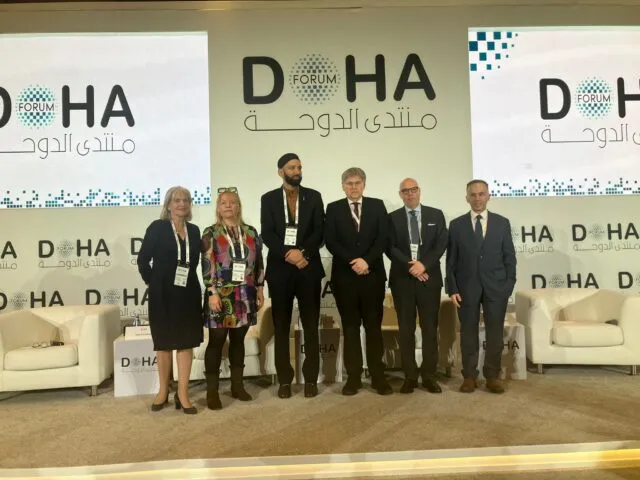
Since its inception in 2003, the Doha Forum has become a key fixture on the global conference circuit, and this year I had the privilege of attending to help deliver a Wilton Park panel on The Role of Faith Leaders in Defending the UN Charter and International Law. As a space where policymakers, influential thinkers, and senior business figures come together to discuss some of the world’s most pressing challenges this year’s theme set an ambitious tone: “Justice in Action: Beyond Promises to Progress”.
Against the backdrop of ongoing conflict in Gaza, Sudan, and Yemen, conversations at the event focused on peace, re-installing trust and strengthening multilateral cooperation. Aligned to these central themes, it was fantastic to support Wilton Park’s panel at the event where the five panellists noted the significance of Point 18 in the Gaza Peace Agreement which calls for “an interfaith dialogue process… based on the values of tolerance and peaceful co-existence”. With this in mind, the speakers recognised that now is an opportunity for faith leaders and faith-based actors to come together and promote reconciliation and international law, and uphold human dignity.
Throughout, the sessions sought to encourage honest and constructive debate. One significant moment was the Qatari Prime Minister’s candid statement, in conversation with Tucker Carlson, that despite the ceasefire in Gaza being at a “critical moment” Doha would not unilaterally fund its reconstruction. Rather the Prime Minister called for “inclusive engagement” amongst all actors to ensure regional peace.
Other headline announcements included the commitment of a new $500 million five-year strategic partnership between the Gates Foundation and Qatar Fund for Development to support health, climate resilient agriculture, food security, and education. The role of the United States also featured prominently, with reflections made on the country’s shift from being a leader in peace-making to having a more transactional, “dealmaking” attitude.
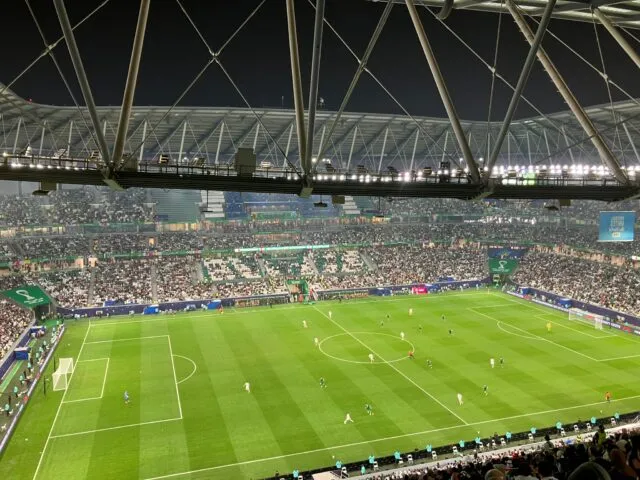
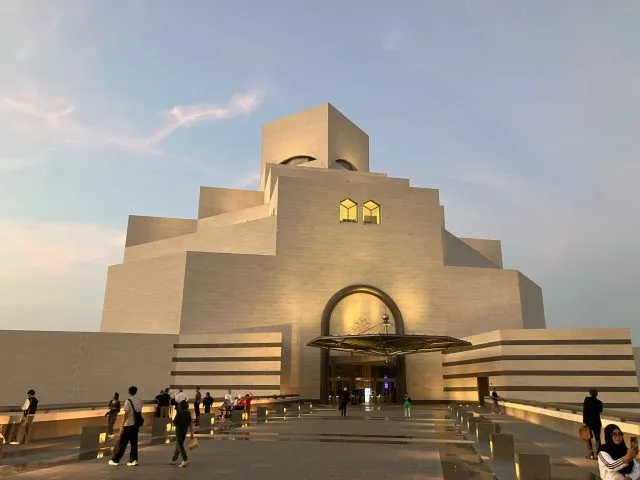
Qatar’s ability to convene high-profile speakers ranging from Bill Gates, Donald Trump Jr., Hillary Clinton to President Al-Sharaa of Syria was striking. As a small state, its influence is remarkable and unmistakeable, and this was evident not only in the Forum itself but across the city. Cultural diplomacy was on full display: from world-class museums to the hosting of the Arab World Cup. For me, a particular highlight was joining 40,000 fans at the Syria versus Palestine football match and also visiting the Museum of Islamic Art. These cultural initiatives complement Qatar’s position, alongside the Forum, as a leader in international diplomacy and mediation.
Global platforms like the Doha Forum face a delicate balancing act, as visibility and messaging matter, but so do credibility and action. After three days of packed debate, networking and media frenzy, I’m keen to see how promises will be delivered and actioned. That, ultimately, will be the true measure of justice in action.