80 years of Wilton Park
In 2026 Wilton Park celebrates its 80th birthday and a remarkable contribution to international peace and understanding. Find out more about Wilton Park today and what our anniversary means to the UK and global partners.

80 years of bringing global leaders together to address the world's most pressing challenges.
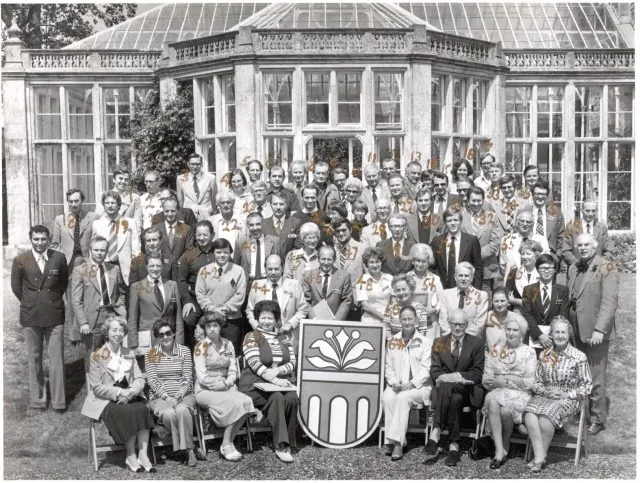
Wilton Park was born from one of the 20th century’s most ambitious peace-building initiatives, part of Sir Winston Churchill’s vision to help re-establish peace and democracy in Europe following the Second World War. Wilton Park was founded in January 1946, under the direction of a newly formed Labour government and began life as a pioneering education programme for German prisoners of war at Camp 300 in Beaconsfield.
Under the inspired leadership of its founding warden, Sir Heinz Koeppler, a German-born academic who had fled to Britain, Wilton Park created something truly remarkable: a space where former enemies could engage in open, expert discussion to foster mutual understanding and rebuild trust. Through intensive courses combining history, politics and democratic principles, participants discovered the power of dialogue to transform relationships and build the foundations for lasting peace.
Sir Heinz, a German-born academic who had fled to Britain, brought a unique perspective and determination to the institution. His vision was to create a space where open, expert discussion could foster mutual understanding and help revivify Anglo-German relations in the post-war period. Through intensive courses combining history, politics and democratic principles, Wilton Park worked to rebuild trust and establish the foundations for lasting peace.
In 1948, Wilton Park ceased to be a training centre for prisoners of war and management passed solely to the Foreign Office’s German Section. The institution began focusing on bringing Germans from the British occupation zone to learn about German and British history and institutions, with women allowed to participate for the first time in 1947.
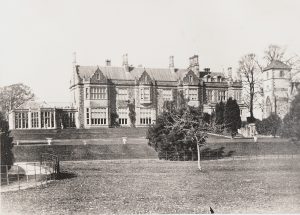
In 1950, Wilton Park moved to its current home at Wiston House, a 16th-century country house near Steyning in West Sussex, owned by the Goring family. This move marked a significant transition in the institution’s history. The new location provided an ideal setting – secluded yet accessible, private but not exclusive – that would become synonymous with the Wilton Park brand and method of dialogue. In January 1951, Wilton Park reopened with its first session at its new home.
A new home marked a new chapter for Wilton Park. Heinz Koeppler redefined its purpose: to offer “a course in citizenship, in politics, and in common European problems — with an emphasis on realism and impartiality.”Participants were encouraged to “concentrate on the awkward and vital issues,” and to be “brief, trenchant, and if possible, witty.”
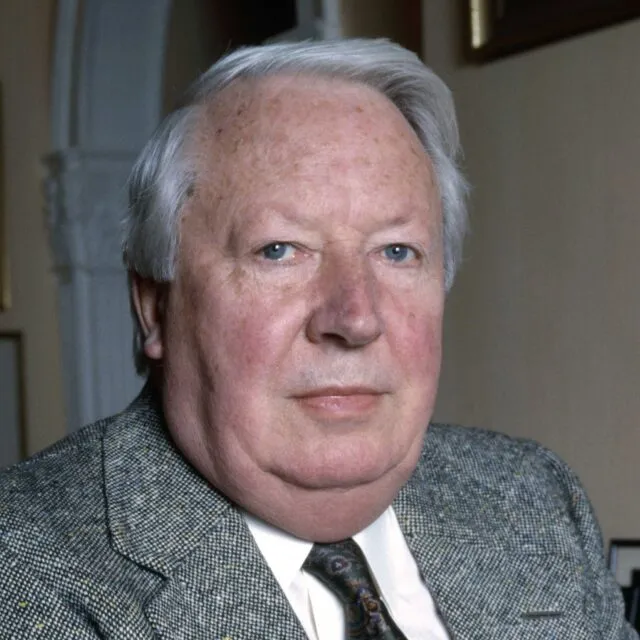
“When its initial task was finished, Wilton Park might have been allowed to disappear. Instead its history illustrates what is perhaps one of our national characteristics – how when we hit on a really good idea we are reluctant to discard it in the face of new developments. Instead we try to adapt and enlarge it to meet them.”
Edward Heath, British Prime Minister 1970-1974
From the early 1950s, Wilton Park began to broaden its scope beyond Anglo-German relations. The institution expanded to include participants from across Western Europe, and later from the United States and Canada. Conference topics diversified significantly, moving beyond post-war reconstruction to address emerging Cold War tensions, European integration, transatlantic security, and a growing range of international policy challenges.
From the late 1940s, European integration became a central theme at Wilton Park. ‘The Uniting of Europe’ featured in early editions of the Wilton Park Review, and the institution provided a crucial forum for discussing Britain’s complex relationship with what would become the European Union. From the 1950s to the 1970s major conferences examined Britain’s relationship with Europe and the Commonwealth, and wider role in the world.
By the 1970s, Wilton Park was firmly embedded in European political discourse. Prime Minister Edward Heath, one of its strongest advocates, worked with French President Georges Pompidou to establish the European Discussion Centre at Wilton Park, creating a platform to explore the complexities of European enlargement. Throughout the following decades, as Britain joined the European Community in 1973 and navigated its membership, Wilton Park provided a neutral space where different national perspectives could be candidly explored, helping successive British governments explain the ‘British point of view’ to partners. The institution played a particularly important role during key moments such as the debates over the Single European Act in the 1980s and the Maastricht Treaty in the 1990s, bringing together officials, academics and opinion formers to examine Economic and Monetary Union, Common Foreign and Security Policy, and Justice and Home Affairs.
In the 1980s, Soviet representatives joined discussions for the first time, even as Cold War tensions persisted. Outside formal sessions, Russian economists challenged participants over chess boards, and interpreters from the Soviet Embassy in London stepped out of their booths to join the debate.
Throughout the Cold War, Wilton Park convened vital discussions on East-West relations and arms control. Conferences addressed ideological competition and the consequences of the Cold War, including for defence and security policy. As tensions evolved through détente in the 1970s and renewed confrontation in the early 1980s, Wilton Park discussions tracked these developments.
From the 1980s, Wilton Park became a key British venue for discussing arms control, helping to support the landmark agreements that would follow. Wilton Park first covered arms control as a dedicated conference in December 1983 with it becoming a key theme from the late 1980s. Since then more than 100 conferences have been convened on the topic.
During this period Wilton Park also held some of its most significant dialogues. During the transition to black majority rule in South Africa in the 1980s, Wilton Park became a venue for representatives of the black community and the ruling National Party to meet behind closed doors.

From the early trailblazers and pioneers to today’s leaders, women have played an important role in shaping international policy at Wilton Park.
Learn more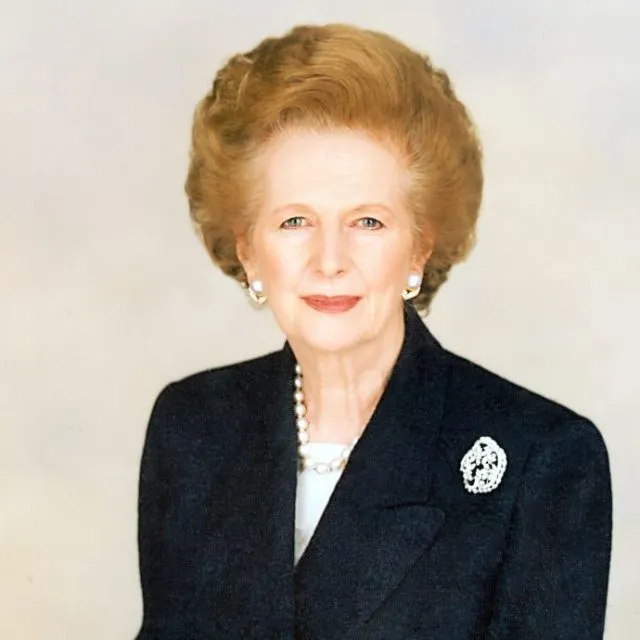
“For me, Wilton Park represents many of the virtues which modern Britain offers the world: confidence in proven values combined with a readiness to challenge doubtful assumptions: the courage to voice unpopular views but tolerance of reasoned dissent.”
Margaret Thatcher, British Prime Minister 1979-1990
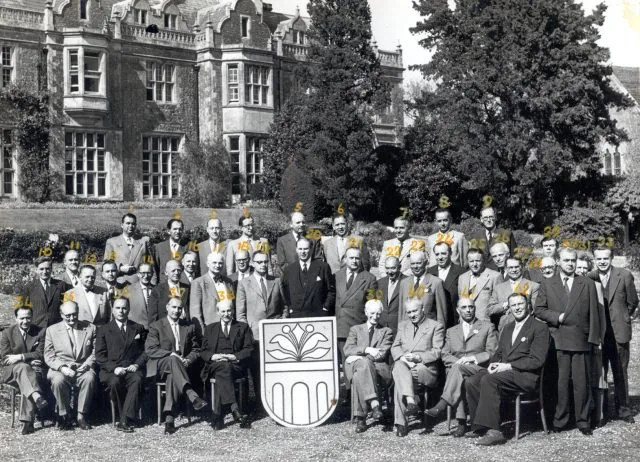 Attlee and Beveridge attend a Wilton Park event in 1956
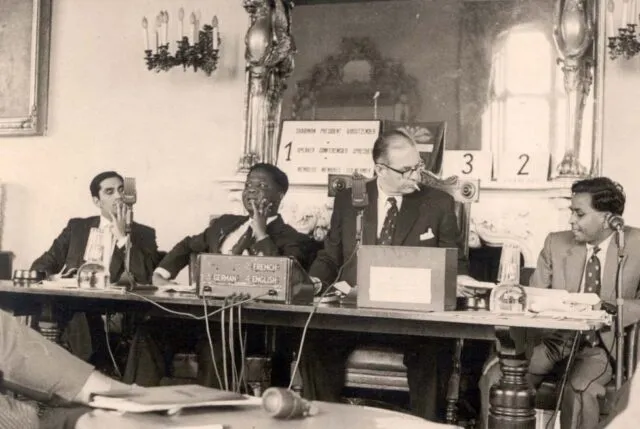 An early Wilton Park conference at Wiston House
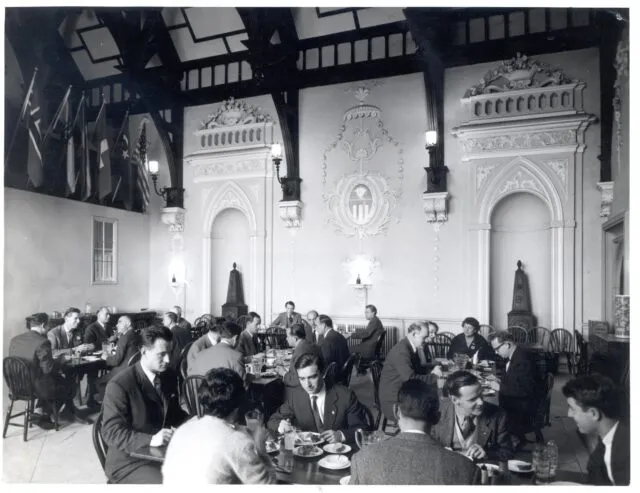 Dinner during the 11th European conference 1959
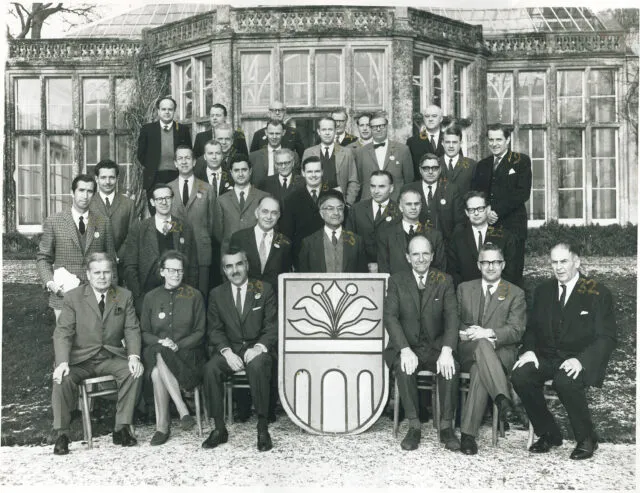 Delegates pose for a group photo in the snow
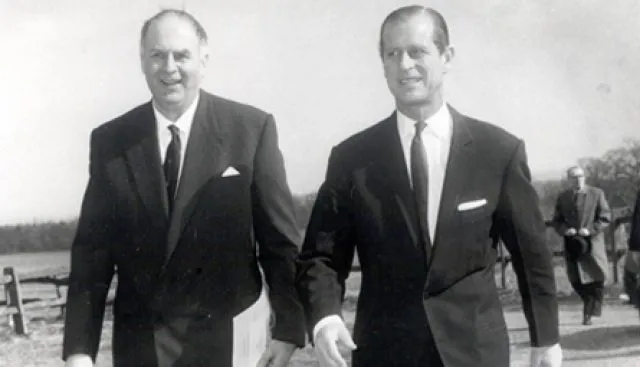 Heinz Koeppler greets HRH The Duke of Edinburgh at Wilton Park in 1968
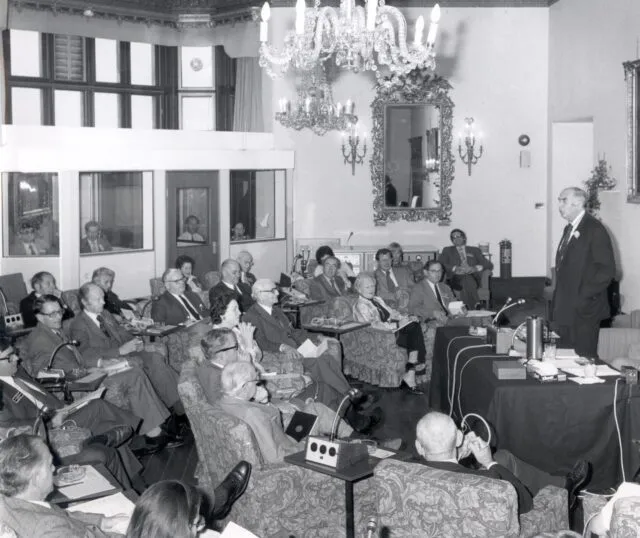 Heinz Koeppler addresses a conference
Heinz Koeppler’s last conference in 1977
Heinz Koeppler addresses a conference
Heinz Koeppler’s last conference in 1977
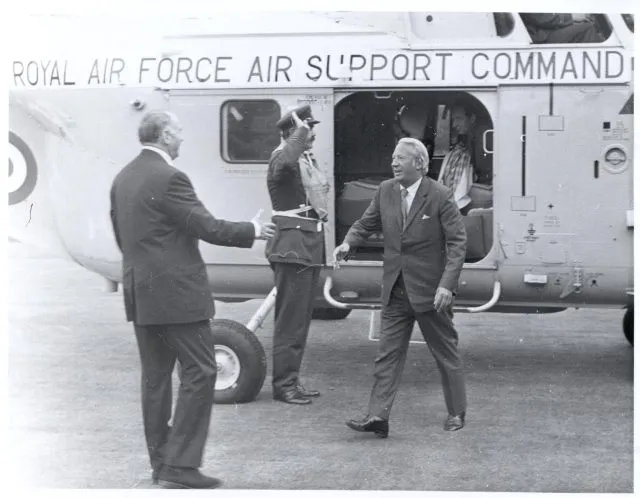 Edward Heath arrives at Wilton Park by helicopter
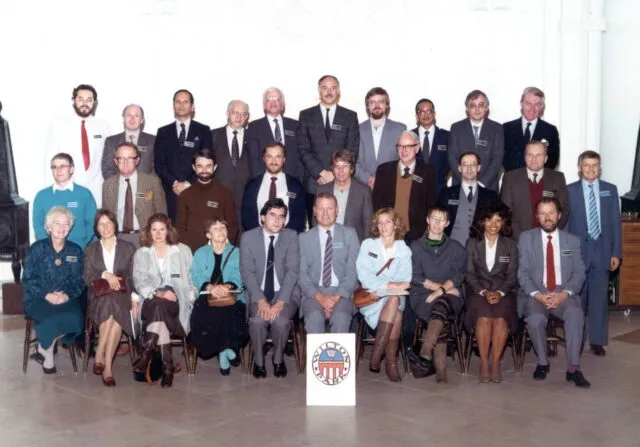 Gordon Brown attends a Wilton Park event in 1986
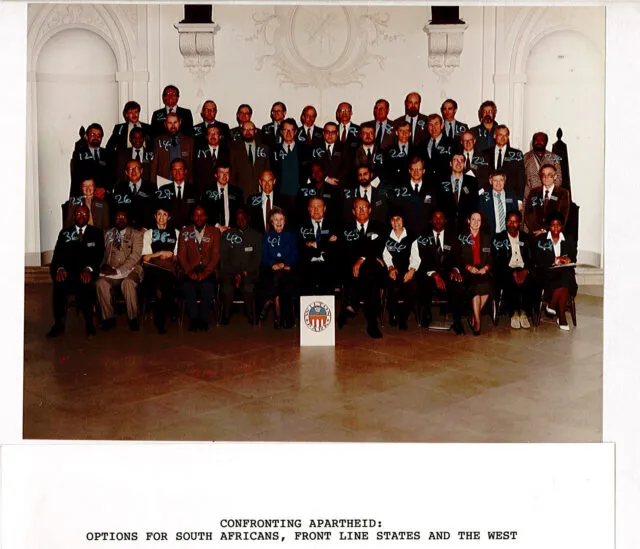 1987 event on confronting apartheid
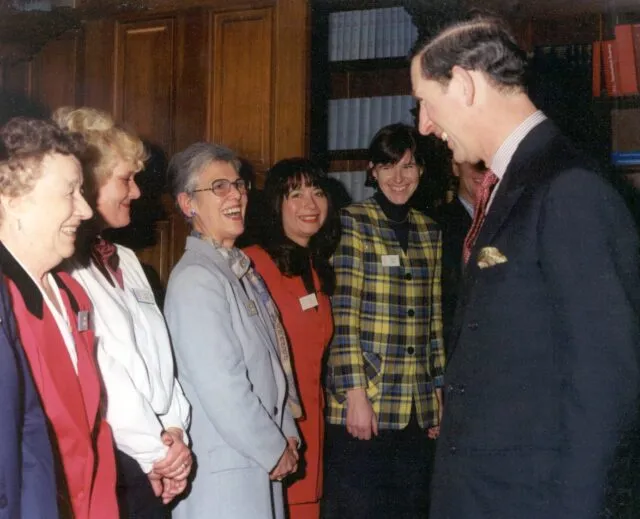 King Charles, then the Prince of Wales, meets with Wilton Park colleagues
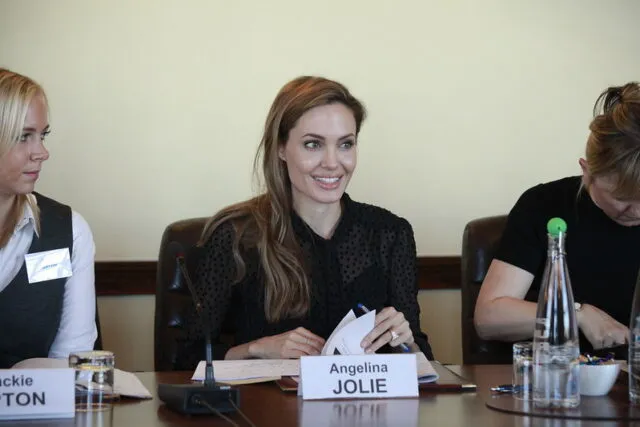 Angelina Jolie speaks at a Wilton Park conference
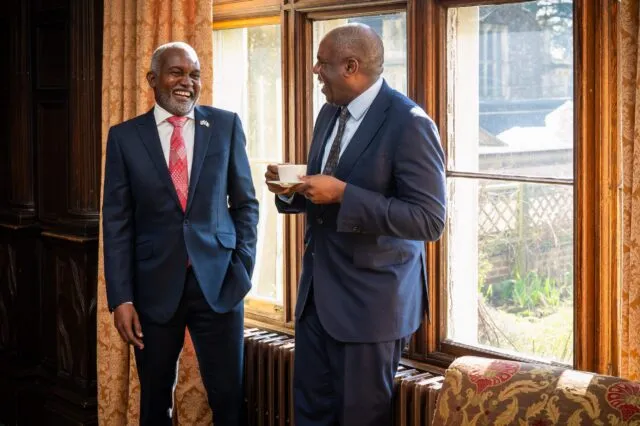 David Lammy and Nigeria Foreign Minister Yusuf Tuggar in the margins of a Wilton Park event
A major evolution came with Wilton Park’s transformation into an executive agency of the Foreign and Commonwealth Office in 1991. This status brought both opportunities and challenges, including greater financial accountability but also the flexibility to innovate and expand.
Wilton Park organised its first overseas conference in Finland in 1988. In 1993 Finland hosted another event, this time on EU enlargement, which kick-started a raft of dialogues with European partners. Poland was next to host an event in 1994, and in the years that followed, the EU enlargement conference series culminated in 30 countries hosting Wilton Park events.
The first Wilton Park conference outside Europe took place in Japan in 2003, followed shortly by Brazil. This globalisation of Wilton Park fulfilled Sir Heinz Koeppler’s original vision and demonstrated the institution’s adaptability. By 2024, Wilton Park had convened conferences in more than 50 countries and territories across five continents.
Today, Wilton Park is an important UK contribution to supporting and conducting multilateral engagement. It holds around 80 strategic dialogues each year, convening approximately 3,500 representatives and opinion formers from over 120 countries. As an executive agency sponsored by the Foreign, Commonwealth & Development Office, it serves as the UK government’s expert in convening international policy dialogue, supporting UK foreign policy development and the government’s international strategic priorities. The institution continues to innovate, incorporating digital engagement whilst maintaining the face-to-face dialogue that remains at its core.
From a small prisoner-of-war education centre to a world-leading international policy forum, Wilton Park’s 80-year journey demonstrates the enduring power of dialogue to build understanding, advance policy solutions, and strengthen international cooperation.
As participants regularly testify, Wilton Park creates connections, insights and outcomes that ripple far beyond individual conferences. Sir Winston Churchill believed that “meeting jaw to jaw is better than war.” For eight decades, Wilton Park has embodied this principle, providing space where the world’s most pressing challenges can be addressed through expert, open and respectful dialogue. In an increasingly complex and interconnected world, this mission remains as vital as ever.
In 2026 Wilton Park celebrates its 80th birthday and a remarkable contribution to international peace and understanding. Find out more about Wilton Park today and what our anniversary means to the UK and global partners.

Some of the key moments from our history.
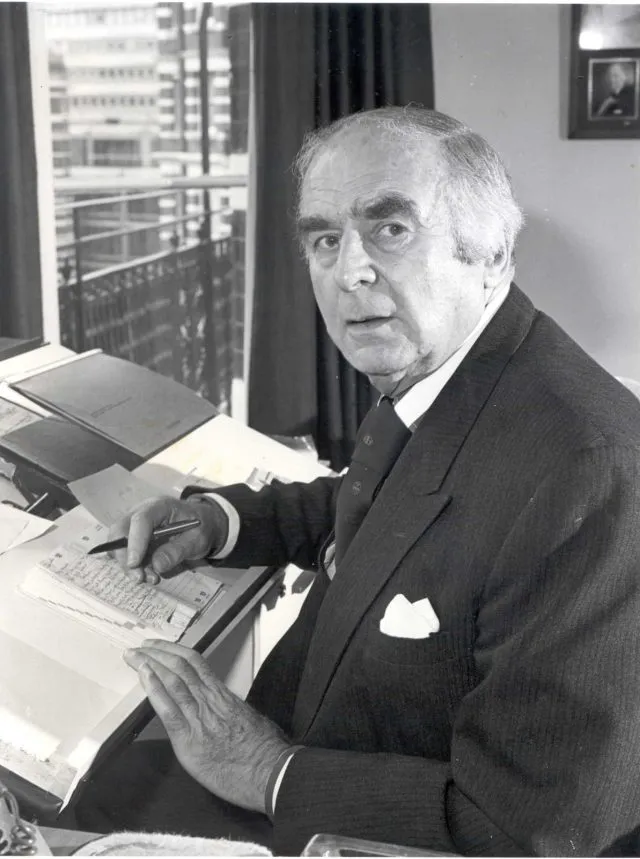
Heinz Koeppler establishes Wilton Park.

Lady Astor, the first woman to take a seat in the UK Parliament, spoke at Wilton Park on “Women in Public Life”.
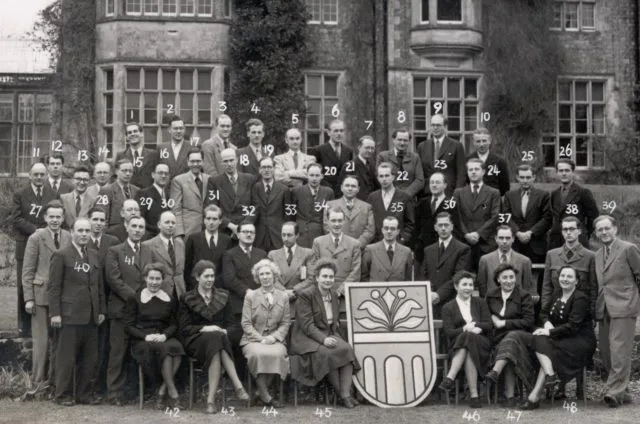
Wilton Park relocates to Wiston House, Sussex.
HRH The Duke of Edinburgh visits Wilton Park’s 100th conference.

Wilton Park’s 143rd conference explored the ecological crisis and its societal impact, marking Wilton Park as an early voice on environment and sustainability.
Prime Minister Edward Heath and the French President, Georges Pompidou, agree discussions on European enlargement should be addressed at Wilton Park and create the European Discussion Centre.

In the wake of the OAPEC oil embargo, Wilton Park began tackling global energy concerns, focusing on European energy security and reducing reliance on imports.
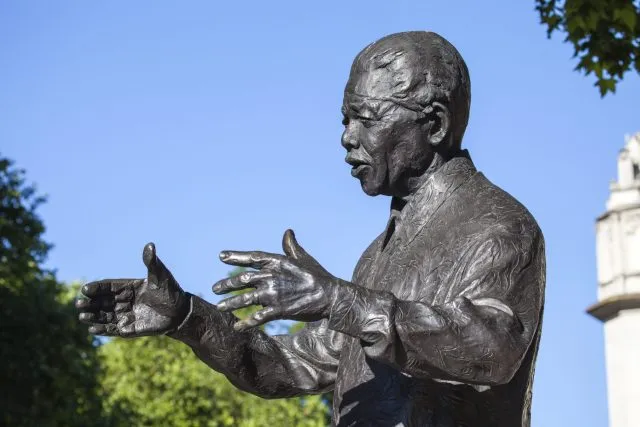
Wilton Park becomes a venue for South African representatives to discuss the transition from apartheid.

As satellite broadcasting and global news networks begin reshaping diplomacy, Wilton Park examines how the communications revolution is transforming political decision-making and international relations.

Mikhail Gorbachev’s reforms in the Soviet Union enabled the first Soviet participants at Wilton Park events.

The first overseas Wilton Park conference takes place in Finland, on East-West relations.

Discussions during a 1988 Wilton Park conference predict the the collapse of the Soviet Union.

Post-Cold War, Wilton Park conferences focus on implementation of the Chemical Weapons Convention — a landmark arms control agreement signed in 1993 to take effect in 1997.
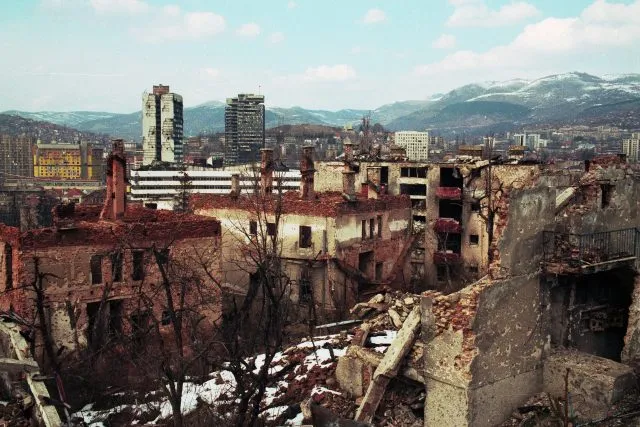
Wilton Park holds a conference on the Western Balkans after Milosevic, less than three months after the end of NATO’s air campaign.

Japan hosts the first Wilton Park conference outside of Europe, with Brazil following a few months later.
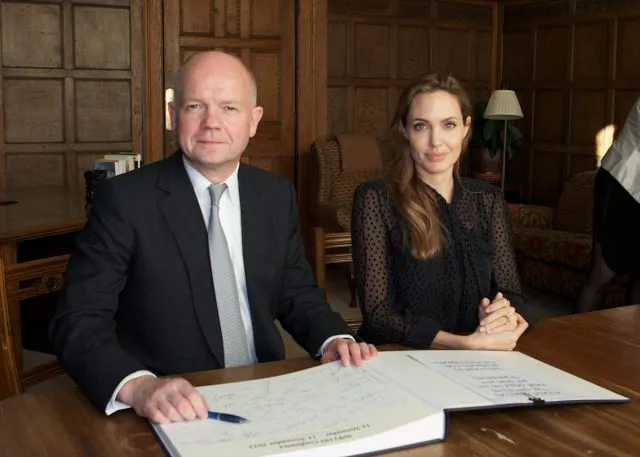
Rt Hon William Hague MP and Angelina Jolie, United Nations’ Special Envoy, attend Wilton Park’s conference on preventing sexual violence.

From 2018 to 2021, Wilton Park convened multiple dialogues on promoting inclusive citizenship drawing together major local and international faith-based organisations.

From 2019 Wilton Park hosts a series of conferences to support UK work on responsible space behaviours culminating in the adoption of a resolution at the UN General Assembly.

Wilton Park convenes a series of dialogues on artificial intelligence, including on its use in the public sector. Dialogues on AI become a growing area of focus.
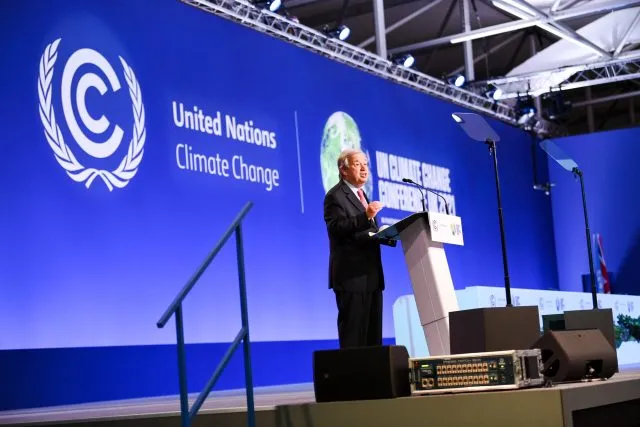
Wilton Park acts as the Secretariat for the major COP26 initiative, Catalyst for Climate Action, on behalf of the UK’s COP26 Presidency.

Following Russia’s invasion of Ukraine, Wilton Park convenes a series of dialogues on issues including economic recovery, criminal justice, information warfare, and strategic deterrence.

Wilton Park continued its important work on faith, convening ‘the role and responsibility of religious leaders in times of war, atrocities and polarisation’ conference. The event was referenced by the UN Secretary General in his report to the General Assembly.
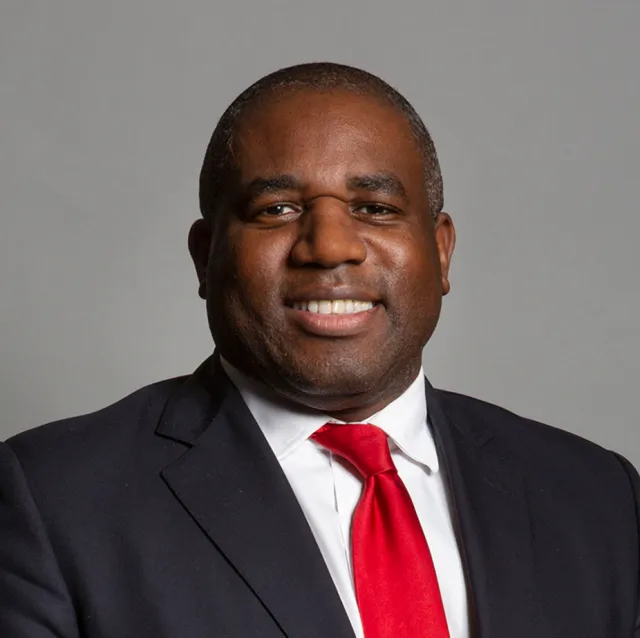
“Wilton Park’s role has evolved, but the core principle has remained the same. Creating space to connect Britain with our partners. Space to build trustful dialogue. Space to talk not only to decision-makers, but also the wider society who shape their attitudes. ”
The Rt Hon David Lammy MP, Former Deputy Prime Minister
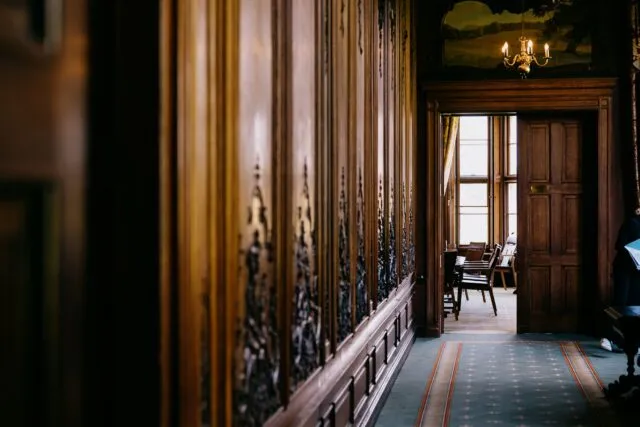
‘The Policies and Power of Public Diplomacy,’ published in 2025, explores Wilton Park’s history, evolution and contribution to international affairs, peace and security.
Learn more about the book'Wilton Park's aim was and is to unite people: to bring together those who disagree, often violently, and by patient, outspoken discussion of their conflicting views and assumptions, to reconcile rivals and enemies in recognition of their common humanity, their shared problems and their joint hopes of peace. In today’s strife torn world, no task could be more urgent.'
Richard Mayne, Historian and Author of 'In Victory, Magnamity, in Peace, Goodwill: A History of Wilton Park'