The future of multilateralism

55544419484_2ef3c76a7d_b

Maybe it’s just September, but across Wilton Park’s world there’s a new uptick of energy and ideas in international affairs. Volatility and threats continue to grow, but there is also a renewed sense of determination, focus and ideas being generated to meet the many challenges the UK and the world face.

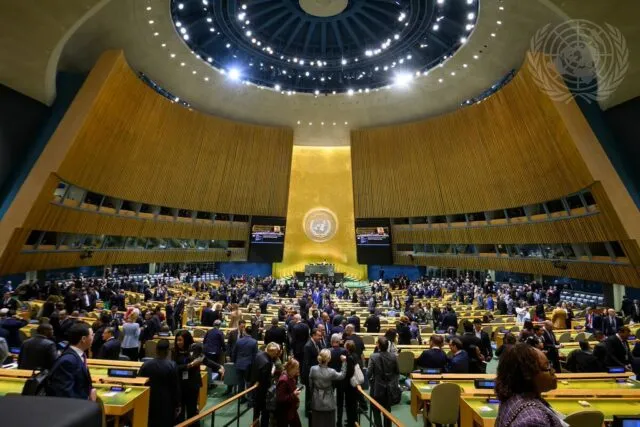
The past week has traditionally been a big one in diplomacy as the United Nations General Assembly takes place. Understandably, there is much discussion of multilateralism being in crisis, and at Wilton Park we are supporting emerging discussions on what a better future may look like.

Finally, the UK Government has prioritised shifting power and control closer to local communities. Wilton Park is perhaps the most significant HMG convenor and networker of organisations around the UK on international issues. Rewiring the State raises some important implications – and opportunities – for how government organises, talks and engages around the UK’s place in the world and I’ve written about this below.

Tom Cargill

Chief Executive


Rewiring the state and the UK’s place in the world

‘Rewiring the State’ implies an ambitiously radical shift in how Whitehall engages across the UK on international issues as much as local.

In our latest blog, we analyse the opportunities offered by the government’s vision for a new model of government which radically shifts power towards local communities, and why connecting the local, national and global will be critical to the UK’s future influence.

Read the blog


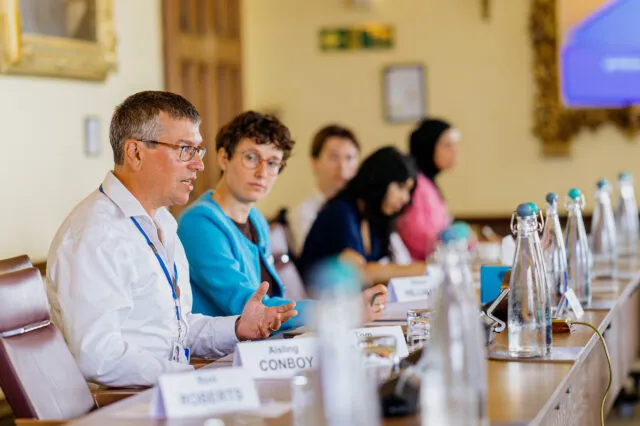
Wilton Park CEO Tom Cargill speaks at the Wilton Park conference table

The crisis in multilateralism

As the 81st UN General Assembly High Level Week ends, Tom Cargill reflects on the crisis in multilateralism, and how institutions must adapt to a changing world.

Watch the video

Reforming the UN for a changing world

The multilateral system is under real strain. Norms are eroding, institutions are fragmenting, and confidence in collective problem-solving has diminished. Yet across countries, leaders and regional bodies, calls for UN reform are building.

Next month, our dialogue, Building Leadership for Reform of our International Architecture, will bring together a group of like-minded countries that champion multilateralism to explore realistic pathways towards a stronger global governance system, one capable of responding to today’s critical challenges and overcoming the limitations of what already exists.

Together, participants will work towards a shared understanding of the fundamental problems with the current system, a common vision for the future built on clear values and principles, and realistic pathways to turn that vision into reality. Ultimately, the dialogue aims to build the confidence needed for collective action, identifying the leaders and coalitions who can carry this agenda forward.


A group of people stand talking at Wilton Park, in strong light and shade.

The Wilton Park Signal

Each year we bring together thousands of policymakers, business leaders, practitioners and experts to make progress on our biggest shared challenges. We connect and accumulate an incredible array of information and ideas, which gives us a privileged view of emerging themes and policy connections. The Wilton Park Signal provides a cross-cutting view of how policy areas are connecting and how policymaking and governance processes are responding.

Read the Wilton Park Signal

Latest reports

Read our latest reports, including on transitional justice in contemporary conflict resolution, harnessing and adopting AI in emerging economies and childhood in the age of AI.

Read our latest reports
A participant holds their phone up at the conference table, photographing the speakers

Kateryna Busol in the grounds of Wilton Park

Latest videos: Transitional justice in contemporary conflict resolution

The foundations of transitional justice are under severe pressure. Political and financial strain, democratic decay and conflicts are growing in scale and complexity. Hear experts discuss why traditional justice mechanisms are no longer sufficient to address the scale and nature of mass atrocities, and why achieving lasting peace requires a justice-based approach to redress and accountability.

Watch the playlist

Upcoming events

Getting growth right: real-world choices for jobs, supply chains, finance and technology

This retreat will explore what it means to pursue ‘good growth’, growth that expands opportunity and prosperity while strengthening its long-term foundations, drawing on recent Beyond GDP thinking, including the UN Secretary-General’s High-Level Expert Group report.

Set against a more contested and uncertain global economy, participants from government, business, finance, international organisations, civil society and academia will focus not on new metrics, but on practical shifts in how growth-related decisions are framed and made, with particular attention to labour, AI, finance, standards and supply chains, and the trade-offs between productivity, inclusion, resilience and sustainability across different country contexts.

Find out more


Global Impact Group Retreat

The second Global Impact Group retreat of 2027 offers a timely opportunity for senior officials and business leaders to discuss the new Government’s emerging foreign, industrial and defence policy agenda.
If you want to find out more, contact Helen Gould, Head of Global Public/Private Partnerships.


From Declaration to delivery: operationalising the Commonwealth Sustainable Cities Coalition to achieve a more resilient Commonwealth

Held with the Commonwealth Sustainable Cities Initiative ahead of CHOGM 2026, this will bring together government, city and investment leaders to explore sustainable urbanisation as a driver of Commonwealth prosperity. Participants will agree next steps for launching the Commonwealth Sustainable Cities Coalition as a flagship partnership.


Human rights futures: security as a way of advancing human dignity, rights and justice

This Wilton Park dialogue, part of the Nous: Powering the Future of Human Rights series, will bring together practitioners to explore how security and human rights considerations intersect in today’s geopolitical environment. Participants will build a shared understanding of security policy as a means of advancing human dignity and rights, and consider how to overcome the political challenges this approach may face.


Government partnerships for reconstruction

Government-to-Government partnerships offer one route for combining UK business expertise with government support to help post-conflict or disaster-affected partners rebuild infrastructure quickly, safely and sustainably. This dialogue will examine how to make these partnerships more effective while driving opportunities for UK industry


Wilton Park and Anglo-German relations

In remarks delivered at our dialogue marking Wilton Park’s 80th anniversary, Professor Andreas Busch reflected on Wilton Park’s founding purpose, its impact on post-war German democracy, and the lessons we can learn from its history.

Read the article
Professor Andreas Busch leans forward and delivers remarks at a conference table.

Recent events

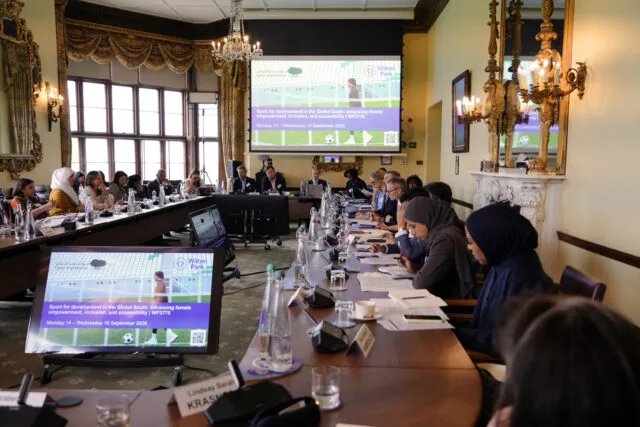
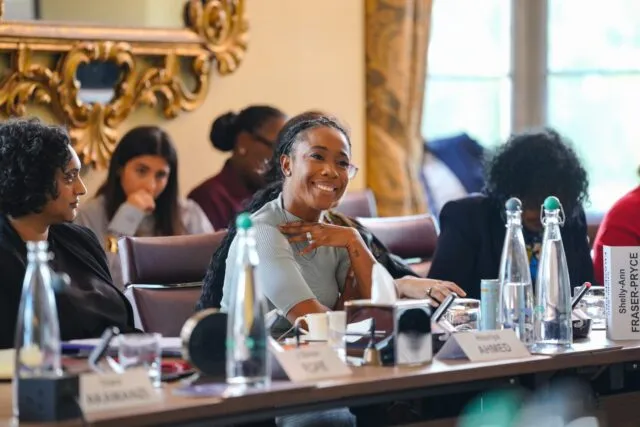
Sport for development in the Global South: advancing female empowerment, inclusion and accessibility

When women and girls have equal access to sport, the benefits extend far beyond the playing field.

Our recent dialogue with partners Qatar Foundation brought together voices from across sport, policy, and civil society to explore how inclusive sport can advance female empowerment and contribute to wider development outcomes across the Global South.


Adapting NATO’s deterrent to the new geopolitical landscape: 17th annual conference on extended nuclear deterrence and assurance

The 17th iteration of our annual conference on NATO deterrence explored questions including the main components of NATO’s deterrence posture and the impact of recent turmoil within and outside NATO on the Alliance’s defence strategy, considering how NATO can and should adapt to the new geopolitical landscape.

Watch Vipin Narang discuss emerging emerging nuclear threats and strategic deterrence.


Youth Ambassador Network

At a time of worldwide turbulence, it’s vital that we nurture a new generation of globally collaborative young leaders.

Earlier this month, Wilton Park welcomed students from the University of Nottingham and the University of Sussex for an in-person Youth Ambassador Network (YAN) event.

Wilton Park’s YAN programme provides an opportunity for young people to explore international issues, strengthen diplomatic skills, and build valuable connections with peers and experts.

This month’s event brought the cohort together to network, meet and learn from Wilton Park programme directors and other experts, explore current global challenges and start to plan their own Wilton-Park style dialogues.

We are proud to provide spaces where young people can help shape the conversations of tomorrow.

The YAN programme is delivered in partnership with the University of Sussex and the University of Nottingham, with funding from the Sir Heinz Koeppler Trust.

What have our Youth Ambassadors learned? Watch the video.


The UK-Japan Relationship to 2040

The UK and Japan, each other’s closest security partners in Europe and Asia respectively, share a partnership worth over £140bn, with strong cooperation across clean energy and other priority sectors. Following visits by both prime ministers earlier in 2026, this policy retreat brought together government, business and other experts to identify key policy areas and priority initiatives for the UK-Japan partnership to 2040.

Want to find out more?


Sign up to our newsletter