
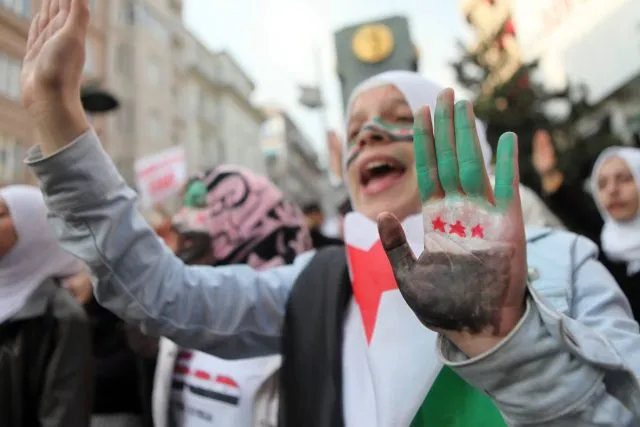
The dialogue also considered challenges in the application of Transitional Justice (TJ) among diverse populations. Participants analysed the role of TJ in two specific contexts: faith-based communities and gender minorities. Across these contexts, a central theme emerged that victims and survivors are not a singular, cohesive group, and often have substantially different needs and objectives from one another. As an example, it was noted that the types of crimes experienced and the priorities for justice varied significantly even from region to region within Syria; for this reason, the NCTJ had opened regional offices and hired personnel to speak local languages, to develop a greater appreciation of the contextual and structural elements of the crimes committed, and to represent the interests of local survivors. Despite this, MENA-based practitioners concurred that context-specific TJ was still an area for growth within the international ecosystem. A senior diplomat from the MENA region highlighted the necessity of understanding local culture and conditions when attempting to resolve conflict.
Faith
Specialists from faith-based TJ initiatives noted that religious communities provide an important tool for tailoring TJ to contexts today. Conversations centred on how religion can both help and hinder TJ by positively bringing communities together, but also by entrenching perspectives against excluded, marginalised populations. On a positive note, participants noted that certain initiatives have been able to leverage faith to the benefit of victim’s justice. A local advocate described how the senior Yazidi religious leader in Iraq not only welcomed back women who had experienced CRSV but also placed them at a higher rank within society. This empowered Yazidi women to speak about their experiences and advocate for justice. Participants also raised numerous other examples: in Rwanda, religious institutions encouraged people to admit their mistakes and ask for forgiveness, rebuilding community trust and moving towards reconciliation; in South Sudan, a female-led council of churches played an instrumental role in justice engagement and ensured that women also received appropriate justice; in South Africa and Colombia, Truth Commissions were famously led by Archbishop Desmond Tutu and Reverend Francisco de Roux.
Gender
Discussions focused specifically on incorporating the perspectives of gender in TJ, underscoring an acute need to offset the shrinking support to grassroots organisations who frequently advocate for justice for CRSV. Participants recognised that addressing CRSV is a particularly important growing space for TJ, because conflicts have inherent gender dynamics that are vital to consider. As identified by a Ukrainian TJ specialist, interventions must be attempted as early as possible to provide a space for female survivors to discuss their experiences and to enable reparations for children affected by, or resulting from, sexual violence; this kind of justice could not afford to wait for a moment of ‘transition’.
Many participants observed that conversations around CRSV are often limited and largely female-driven, with men uncomfortable discussing its incidence and associated need for justice. A Ukrainian specialist stressed that men can play an important role in confronting CRSV, not only in empowering women survivors, but also as potential victims themselves. A dedicated breakout session suggested a three-pronged approach to addressing problems in TJ efforts for CRSV, while acknowledging varying needs of diverse victims (see table below).
| Identifying Problems and Solutions in Case-Specific TJ for CRSV | |
| (I) Addressing ‘silences in the law’ around CRSV | Problem: Participants noted the need to address gaps in international law regarding protections against CRSV. For example, the language in the Geneva Conventions is vague and the law has a tendency to prioritise sexual assault over other kinds of gendered violence. There is also a marked neglect around the gendered dimensions and harms emanating from the crime of aggression. Solution: Participants offered solutions related to fostering a better understanding of CRSV legally, with clearer definitions and protections in international law. |
| (II) Engaging CRSV in primary budgets | Problem: Current funding for CRSV is often excluded from core TJ budgets and is therefore amongst the first to be affected by budget cuts. Solution:Participants discussed creative funding efforts focused on collective funds, local governments, diaspora communities, and private sector actors. |
| (III) Leveraging male populations as potential allies and victims | Problem:Men play an important but underutilised role in TJ related to CRSV, both as potential allies and victims. Female victims of CRSV in Iraq who led calls for TJ were often those supported by male family members. Men were also victims of CRSV, yet often removed from associated narratives. Solution:Participants discussed the need to engage men in CRSV, with a timely and significant requirement to better involve men and men’s networks. It is important to distinguish modes of engagement when dealing with civilian and military men. |
The problems and solutions identified by participants critique the practice of ‘copying and pasting’ approaches from one context to another. Instead, participants agreed that difficulties in achieving justice for gender-based violence provides an emerging space for tailored TJ efforts to expand. CRSV advocates proposed adaptations to TJ tools and language to meet case-specific challenges. Conversations more broadly suggested that the rationale behind applying TJ to diverse contexts could offer novel perspectives to ensure that TJ meets the needs of victims and survivors. This can not only directly address their needs, but also how to amplify their agency. A victim-centric approach that considers diverse populations could enable TJ to engage across multiple stakeholders and improve outcomes.