
A number of suggestions have been put forward as to how to take this agenda forward more effectively.
- Agree on a single definition of Inclusive Education, with core principles which can be widely communicated. This should encourage the conversation to be about the inclusion of all learners without losing the very real need to ensure that those with disabilities are part of the design. This should broaden the current narrative away from disability to emphasise the wider benefits of Inclusive Education and make sure it fits with broader debates around economic empowerment, quality, improvements to health etc. It should be made very clear that all children benefit from Inclusive Education and that all children, including those with complex needs, should be educated through Inclusive Education.
- There is continued need for research, investment and empowerment at the local level. A focus on what works in context is important as well as that research on quality should not be predetermined by those from the global north. Furthermore, whilst a lot of discussion draws attention to the global or regional level, there is need to involve more local actors. Proposals, research or investments should account more for those at the local level, including educators, families and people with disabilities. This is also about making sure research is communicated in ways that are contextually relevant and accessible to non-specialists. This may involve communications that demonstrate mutual benefits, involve younger voices, or are innovative (sports events, influencers, pop stars).
- There is need for building and strengthening partnerships with and beyond the disability sector so that, whilst we retain a strong focus on disability, other broader education and human rights initiatives can become collaborators. It is crucial to reach out to form a much broader coalition of partners.
- This also speaks to better coordination and collaboration of current partners. There is a need to stop working in silos and do a better job of joining up initiatives and learning. Partly so that we can increase opportunities for learners but also to stop duplication.
- Despite the volume of research available, there are still significant research gaps. This includes in AI, where there is need for greater safeguarding that pays attention to disability.
- In relation to financing specifically, there are the replenishment of both GPE and ECW coming up which have new strategies with a focus on inclusion, so these are moments that can be used for amplifying any messages around equity and inclusion.
- Clear call too to try and ensure disability expertise is included from the start and that we are not trying to influence broader education sector reforms from the sidelines or in separate discussions.
Conclusion
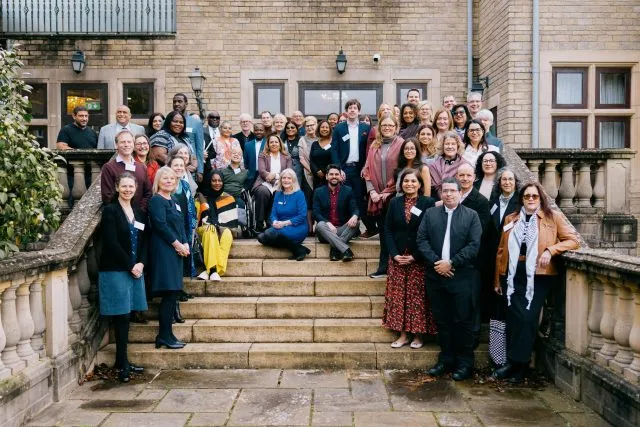
This Wilton Park dialogue, involving over 50 representatives, explored the current state of the evidence, remaining gaps and the opportunities that now exist for effective and cost-efficient implementation of Inclusive Education that works for children with disabilities. It repeatedly noted that funding to improve general education and learning continues to be done in parallel to investments made to support learners with disabilities, creating inefficiencies, as well as failing to effectively transform systems to improve learning for all children. The dialogue was keen to promote that Inclusive Education transforms school systems to cater to all students, including children with disabilities, by eliminating segregation and ensuring accessibility in environments, curricula, teaching practices, and cultures. Genuine inclusion is only achieved by transforming mainstream systems, not by adapting parts of it to integrate learners with disabilities.
The dialogue identified several interlocking areas for urgent attention. Teacher preparedness is critical, with the need to increase the focus on inclusive pedagogy, especially during pre-service training. Data systems need to be improved so that they can more accurately track children with disabilities and better influence education reforms, plans and financing. Disability needs to become a key factor in education response planning within humanitarian and crisis settings and not sidelined to a small number of ad hoc specialist interventions. Financing for Inclusive Education remains structurally inadequate though co-financing models, Results-Based Financing tied to inclusion indicators, and the upcoming replenishment cycles for GPE and Education Cannot Wait represent real opportunities for shifts in approaches. EdTech and Assistive Technology hold promise but the continued lack of engagement with disability expertise in the creation of new designs is reinforcing segregation rather than inclusion. Across all these areas, the issue is the same: disability is treated as a peripheral concern rather than a core design issue. The Dialogue’s roadmap calls for a single agreed definition of Inclusive Education, broader coalitions beyond the disability sector, better-coordinated financing, and disability inclusion embedded from the outset in every education reform, research agenda, and funding decision.
Dr Lorraine Wapling
Wilton Park | April 2026
In partnership with


-
Notes
Wilton Park reports are brief summaries of the main points and conclusions of a
conference. The reports reflect rapporteurs’ personal interpretations of the proceedings.
As such they do not constitute any institutional policy of Wilton Park nor do they
necessarily represent the views of the rapporteur. Wilton Park reports and any
recommendations contained therein are for participants and are not a statement of policy
for Wilton Park, the Foreign, Commonwealth and Development Office (FCDO) or His
Majesty’s Government nor any participating governments.
Should you wish to read other Wilton Park reports, or participate in upcoming Wilton Park
events, you can find out more here.
To receive our monthly bulletin and latest updates, please subscribe here.