
There have been decades of global intentions and commitments around the inclusion of learners with disabilities in education. The Salamanca Framework for Action (1994) explicitly recognised the need to stop segregated educational provision for children with special educational needs and to ensure schools ‘accommodate all children regardless of their physical, intellectual, social, emotional, linguistic or other condition’.[1] Article 24 of the CRPD mandates inclusive education systems, ensuring persons with disabilities access quality education on an equal basis with others. It is also embedded in Goal 4 of the 2030 Sustainable Development Agenda. General Comment No. 4 (2016) makes explicit that attempts to provide education through integrated or special education provision is not ‘inclusive education’.
Yet children with disabilities continue to face significant barriers to accessing quality, inclusive education and are less likely to attend school, advance in education, or achieve foundational skills compared to children without disabilities.[2] In low- and middle-income countries, children with disabilities are significantly less likely to attend early childhood education, achieve foundational skills, or attend school at all. Barriers include inaccessible school infrastructure, lack of inclusive teaching practices, discrimination, insufficient teacher training, stigma, and lack of access to assistive technology. Girls with disabilities face additional discrimination with lower primary school completion rates tied in with higher risks of child marriage and gender-based violence. Humanitarian crises exacerbate barriers to education for children with disabilities, disrupting Inclusive Education services with alternative options like remote teaching often inaccessible. Broad education reforms frequently happen in parallel with disability inclusion efforts which further entrenches exclusion. Disability focused programmes are mostly small scale, short-term and isolated from national priorities, making them unsustainable.
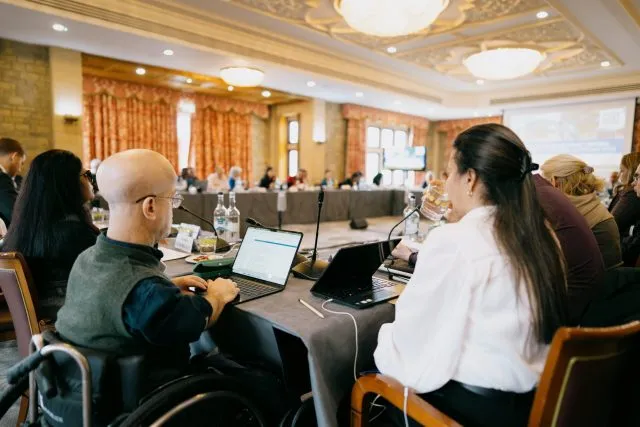
In a background paper for the Dialogue, designed to stimulate early discussions, Carew and Shakespeare prompted attendees to consider both the “rational” and “irrational” arguments that dominate discourse in favour of continued segregation that require consideration.[3] On the “rational” side, the most common arguments put forward focus on the complexity of inclusion and the need for wholesale change which are beyond the capacity of the current context, pushing the intent to include into the future. The prerequisites for inclusion like trained teachers, accessible environment, Assistive Technology (AT), flexible curricula, assessments and data are not in place and the financial investments required are too significant for policymakers to take seriously.
Whilst, ideologically, Inclusive Education makes sense, it is often not seen as being the right time to pursue disability inclusive education. Children with complex needs are regarded as always requiring specialist provision which cannot be provided in mainstream settings without compromising the learning of others, contrary to General Comment 4 of the CRPD. However, there is no research to support these arguments.
There are also other, “more irrational”, excuses made against Inclusive Education, including that children with disabilities are unsuited to mainstream education, that there is overdiagnosis of conditions (e.g. neurodiversity, anxiety) and attempts to use diagnoses to gain advantages, or that diversity and inclusion is not desirable and simply represents bureaucratic overreach. Much of this is linked to stigma, negative beliefs and assumptions that children with disabilities are disruptive, not capable of learning, and are best served in segregated settings. Inclusive Education for children with disabilities is not a desired outcome because education writ large is not suitable.
Attendees were reminded that these are uncomfortable arguments which nevertheless require confronting. Disability inclusion cannot be a specialist concern; it needs to be core to system strengthening, sector planning, financing, teacher education, assessments, infrastructure, EdTech and data collection. It requires political leadership and a breaking down of silos to enable ministries of education, health, finance, donors, OPDs, researchers and implementing partners to align. Inclusive Education is not about adapting schools so that learners with disabilities can be included, it is about transforming systems so that everyone can learn on an equal basis. It recognises that having one inclusive system is simply better, more cost effective and more likely to result in reduced stigma, greater tolerance and social cohesion.
[1] Salamanca Statement and Framework for Action, p.6; original highlights
[2] United Nations Children’s Fund, Seen, Counted, Included: Using data to shed light on the well-being of children with disabilities, UNICEF, New York, 2021.
[3] Carew, M. & Shakespeare, T. (2026) Why do people fail to implement Inclusive Education? International Centre for Evidence in Disability, LSHTM