
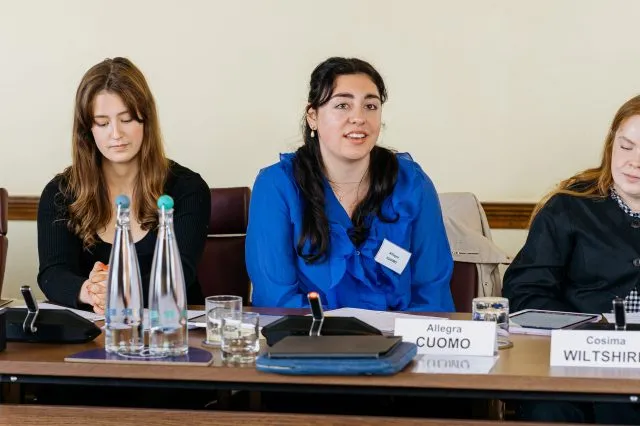
Throughout the discussions, young people shared their experiences of and wishes for participation in decision-making around AI, and other participants contributed their perspectives from civil society, tech companies, regulators, and government to the discussion.
Young people expressed a deep level of disillusionment and distrust due to their lack of involvement in decisions and actions that affect their lives: about the education system, which does not seem designed to equip them for the future; towards politics, as the government does not legislate for them; and with tech companies, which do not consult and engage them in safety and systems.
Participants felt that the disillusionment and political apathy of young people and is dangerous for society, and could lead to detachment or radicalisation of extreme views. Young people should be meaningfully engaged in decision-making at every level, including how AI is rolled out across the UK’s health and education systems, in local councils, in Parliament, and more ordinarily in how AI is showing up in their everyday lives. Focus groups and research led by and for young people are crucial for a comprehensive understanding of their lives in relation to AI, while also helping them navigate AI safely and purposefully.
Young people highlighted how their participation often feels tokenistic, stressed the importance of ensuring their genuine participation to speak about the actual issues they face and be listened to, and asked for proper follow-up meetings. They have also noted that questions they receive in public forums are sometimes inappropriate and irrelevant, and they requested information briefs and better communications to support them when they are asked to speak in policy spaces.
Young people’s experiences of harm are very varied according to where they live and their backgrounds: geographic, socio-economic, educational. A broad range of young people’s perspectives must be ensured in any decision-making and advocacy fora, as the extent and range of harms that exist are not yet fully understood.
As part of this discussion around youth representation, young people also highlighted that the same individuals are often invited to meetings and consultations, leading to pressure on them and reducing the diversity of views. Participants discussed how to deal with the ethical considerations of engaging young people, whether to pay for their time, and how much to expect small tech companies to engage meaningfully with youth. One suggestion was for a larger organisation to host a group of young people to be able to engage with smaller companies that do not have the capacity to do this.
Suggestions for action included:
- Create and fund a young people’s board on digital technologies, which should be intersectional and cover all socio-economic groups and the devolved nations.
- Ensure young people’s participation in the development of responsible and safe AI, and a clear avenue for integrating youth voices in decision-making.
- For those doing R&D, bring in youth perspectives from across the country.
- Organise and fund research done by and for young people on how AI affects their lives and how they can navigate it safely.
- Rebuild young people’s trust in governments and tech companies through well-informed engagement and participation in decision-making and action.
- Organise a nationwide digital literacy programme in education throughout all age groups.
- Establish an annual healthy AI week for schools.